
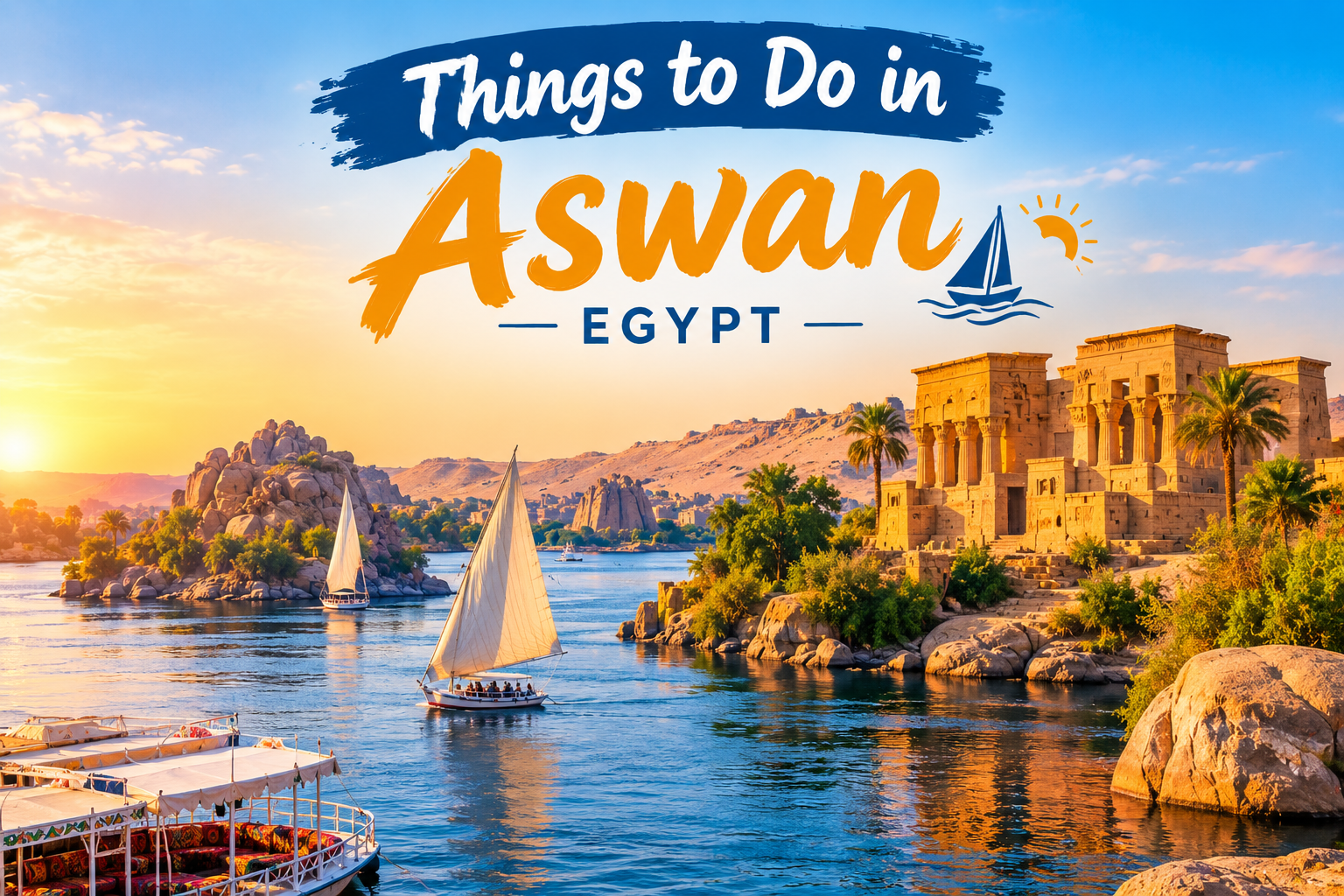
From monumental relocated temples to vibrant Nubian villages and tranquil felucca sails, discover the best things to do in Aswan — with insider tips, sample itineraries, and answers to every question first-time visitors ask.
Why Aswan Deserves More Than a Quick Stopover
While Cairo dazzles with its chaotic energy and Luxor overwhelms with its sheer density of ancient monuments, Aswan offers something entirely different: a breath of fresh air. Nestled in the far south of Egypt, where the Nile River spills out of the Sahara Desert and breaks into a series of rocky cataracts, Aswan is widely considered the most beautiful and tranquil city in the country. The pace here is deliberately slower, the river is wider and dotted with sailboats, and the cultural tapestry is richly woven with Nubian heritage, giving the city a distinct identity that sets it apart from the rest of the Nile Valley.
Many travelers make the mistake of treating Aswan as merely a transit hub—a place to catch a train or board a boat before heading north. In reality, Aswan rewards a proper, unhurried visit. The difference between a rushed half-day ticking off the High Dam and a well-planned two-to-three-day stay is the difference between seeing a checklist of sites and actually absorbing the magic of the Nile. Here, you can sip hibiscus tea on a Nubian veranda, watch the sun melt into the desert horizon from the deck of a wooden felucca, and stand in awe before temples that were literally cut into mountains and moved block by block to save them from rising waters.
Whether you are planning a short 5-day trip focused on the south, a comprehensive 7-day Egypt itinerary, or evaluating a Nile cruise versus a land tour, this guide walks you through everything worth doing in Aswan. Organized by neighborhood, interest, and time available, it provides realistic timing, ticket advice, and the practical details that generic travel blogs tend to skip, helping you build a day plan that actually works.
1. Marvel at the Monumental Temples of Abu Simbel
No list of things to do in Aswan can begin anywhere other than the awe-inspiring Temples of Abu Simbel. Located roughly 280 kilometers southwest of Aswan, near the border with Sudan, these twin rock-cut temples are among the most iconic and photographed ancient sites in the world. Built by Pharaoh Ramses II in the 13th century BC to commemorate his victory at the Battle of Kadesh and to intimidate his Nubian neighbors, the Great Temple is guarded by four colossal seated statues of the pharaoh, each standing 20 meters (65 feet) tall. The sheer scale of the facade, carved directly into the sandstone cliff, is breathtaking, but the interior is equally remarkable. The temple’s inner sanctuary is precisely aligned so that twice a year, during the Abu Simbel Sun Festival (typically around February 22 and October 22), the rising sun penetrates the entire length of the temple to illuminate the statues of Ramses II and the gods Amun, Ra-Horakhty, and Ptah, leaving the god of the underworld, Ptah, in shadow.
Adjacent to the Great Temple is the smaller, yet equally elegant, Temple of Hathor, dedicated to the goddess of love and music, and to Ramses II’s chief wife, Nefertari. Its facade features six standing statues—four of Ramses and two of Nefertari—unusually granting the queen equal stature to the pharaoh, a rare and powerful testament to their bond.
Perhaps the most fascinating aspect of Abu Simbel is not just its ancient construction, but its modern salvation. In the 1960s, the construction of the Aswan High Dam threatened to submerge the temples under the rising waters of Lake Nasser. In an unprecedented feat of international engineering, UNESCO orchestrated a massive salvage operation. Between 1964 and 1968, the entire complex was meticulously cut into over 1,000 massive blocks, some weighing up to 30 tons, and reassembled on an artificial hill 65 meters higher and 200 meters back from the river. The result is a flawless recreation that even mimics the original solar alignment, standing today as a monument not only to ancient Egyptian ambition but to modern global cooperation.
Practical tips for visiting Abu Simbel
- How to get there: Most visitors take a guided convoy or domestic flight from Aswan. The road trip takes about 3 to 3.5 hours each way through the desert. Convoys typically depart Aswan between 3:00 AM and 4:00 AM to arrive at the temples for sunrise, which is the most spectacular and coolest time to visit.
- Flights: If you prefer to avoid the early morning drive, daily flights from Aswan to Abu Simbel take just 30 minutes. This is highly recommended for those who want to maximize their time or prefer a more relaxed schedule.
- Ticketing: Entry to Abu Simbel requires a separate ticket from the standard Aswan archaeological sites. Your guide or tour operator will usually handle this, but be prepared to show your passport at multiple security checkpoints along the desert road.
- Photography: Inside the Great Temple, photography is generally permitted without an extra ticket (unlike some tombs in Luxor), but tripods are usually prohibited. The light inside the sanctuary is dim, so a camera with good low-light performance is ideal.
2. Explore the Majestic Philae Island and the Temple of Isis
If Abu Simbel represents the grand, imposing power of the pharaohs, Philae Island represents the mystical, enduring devotion of ancient Egyptian religion. Located in the middle of the Nile, just south of the Aswan High Dam, Philae was the principal center of worship for the goddess Isis. According to myth, this was the island where Isis found the heart of her murdered husband, Osiris, making it one of the most sacred sites in the ancient world. Pilgrims traveled from as far as Greece and Rome to seek her blessings, and the island remained an active pagan religious center long after the rest of Egypt had converted to Christianity, finally closing its doors only in the 6th century AD under the Byzantine Emperor Justinian.
Like Abu Simbel, Philae was rescued from the rising waters of Lake Nasser. Between 1972 and 1980, the entire temple complex was dismantled and meticulously rebuilt on the neighboring, higher island of Agilkia. The relocation was so successful that the island was landscaped to mimic the original topography of Philae, preserving the magical atmosphere of the site.
Visiting Philae is an experience in itself, as the only way to reach the island is by a short, scenic motorboat ride from the marina near the High Dam. As you approach, the first thing you see is the elegant, towering Trajan’s Kiosk, a graceful Roman-era structure with 14 columns that has become one of the most iconic images of Egypt. Beyond the kiosk lies the main Temple of Isis, adorned with remarkably well-preserved, vibrant reliefs and towering pylons. The sound and light show at Philae in the evening is also highly recommended, as the illuminated temples reflected in the dark waters of the Nile create an unforgettable, almost otherworldly atmosphere.
3. Walk Through a Colorful Nubian Village
No visit to Aswan is complete without immersing yourself in the vibrant culture of the Nubian people. The Nubians are an indigenous ethnic group with a history stretching back thousands of years, long before the rise of the Pharaonic dynasties. When the Aswan High Dam was built, many Nubian villages were submerged under Lake Nasser, and the communities were relocated to areas around Aswan. Today, visiting a Nubian Village in Aswan (such as Gharb Soheil or the West Bank villages) is one of the most joyful and culturally enriching experiences in Egypt.
Accessed by a short, bumpy motorboat ride across the Nile, these villages are a feast for the senses. The houses are painted in brilliant, saturated hues of cobalt blue, sunshine yellow, and vivid magenta, often decorated with intricate geometric patterns, henna designs, and symbols of Nubian heritage. Crocodiles, revered in ancient times as manifestations of the god Sobek, are a common sight, often kept as gentle, docile pets by local families or lounging in shaded enclosures near the waterfront cafes.
Walking through the narrow, sandy streets, you will be warmly greeted by locals offering sweet, fragrant Nubian tea flavored with fresh mint and lemongrass. The villages are also the best place to shop for authentic Nubian handicrafts, including beautifully woven baskets, hand-carved wooden masks, vibrant textiles, and fragrant hibiscus (karkadeh) and spices. Many families open their homes to visitors for traditional Nubian meals, offering a chance to taste dishes like mulukhiyah prepared with a distinct local twist, or freshly baked Nubian bread. Engaging with the community, listening to traditional music played on the tar (a type of tambourine), and simply absorbing the relaxed, welcoming atmosphere provides a profound counterpoint to the ancient stone monuments elsewhere in Egypt.
4. Witness the Engineering Marvel of the Aswan High Dam
While ancient history dominates Egypt’s tourism, the Aswan High Dam is a modern marvel that fundamentally reshaped the country’s geography, economy, and destiny. Completed in 1970 under the leadership of President Gamal Abdel Nasser, the dam was built to control the annual flooding of the Nile, provide hydroelectric power to a rapidly industrializing nation, and expand agricultural land by ensuring a consistent water supply.
Stretching 3,830 meters long and 111 meters high, the dam is a staggering feat of mid-20th-century engineering. It created Lake Nasser, one of the largest man-made lakes in the world, which stretches for over 500 kilometers into Sudan. While the dam brought immense benefits, including protecting Egypt from devastating droughts in the 1980s, it also had significant environmental and cultural consequences, most notably the submersion of Nubian lands and ancient sites, which triggered the aforementioned UNESCO salvage campaigns.
Visitors can drive or walk along the top of the dam, where the sheer scale of the structure becomes apparent. Looking north, you can see the vast, calm expanse of Lake Nasser, while looking south, you can observe the control towers and the power station. Nearby, you will also find the Friendship Monument, a striking lotus-flower-shaped structure gifted by the Soviet Union, which played a major role in financing and constructing the dam. A visit to the High Dam is essential for understanding modern Egypt and the complex trade-offs between progress and preservation.
5. Discover the Unfinished Obelisk and Ancient Quarries
Located in the northern stone quarries of Aswan, the Unfinished Obelisk offers a rare and fascinating glimpse into the practical, day-to-day reality of ancient Egyptian stonemasonry. Most of the towering obelisks that grace the temples of Luxor, Karnak, and even cities like Rome and London were carved from the distinctive pink granite found exclusively in this region of Aswan.
The Unfinished Obelisk was commissioned by the female pharaoh Hatshepsut in the 15th century BC. Intended to be the largest obelisk ever erected, it was designed to stand over 41 meters (137 feet) tall and weigh nearly 1,200 tons. However, as workers were carving it directly out of the bedrock, they discovered cracks in the granite. Rather than risk a catastrophic failure during transport or erection, the project was abandoned, leaving the massive monolith exactly as it was left over 3,500 years ago.
Walking around and even under the obelisk (via modern wooden walkways) is a surreal experience. You can clearly see the ancient tool marks, the trenches carved by workers using dolerite pounders (hard stone balls used to crush the granite), and the channels that would have been used to separate the monolith from the bedrock. The site also features other partially carved obelisks and ancient quarrying inscriptions, making it an invaluable educational stop that demystifies how the ancient Egyptians achieved their seemingly impossible architectural feats without iron tools or wheeled vehicles.
6. Sail the Nile on a Traditional Felucca at Sunset
One of the most universally beloved cruising the Nile River experiences is a sunset felucca ride in Aswan. A felucca is a traditional wooden sailing boat with a single, lateen-rigged sail, powered entirely by the wind. Unlike the large, motorized cruise ships, a felucca offers a silent, intimate, and deeply authentic connection to the river that has sustained Egypt for millennia.
Departing from the corniche in the late afternoon, your captain will navigate the gentle currents around the islands that dot the river at this point. You will glide past Elephantine Island, the historical center of ancient Aswan (known as Abu or Yebu, meaning “elephant” or “ivory”), which still houses the ruins of the Temple of Khnum and a small Nubian Museum. You will also pass Kitchener’s Island (officially known as El Nabatat, or Botanical Island), a lush, tranquil oasis gifted to Lord Kitchener in the late 19th century and subsequently transformed into a spectacular botanical garden featuring exotic plant species from across the globe.
As the sun begins to set, the desert sky transforms into a canvas of fiery oranges, pinks, and purples, reflecting off the calm water. The call to prayer from the city’s mosques echoes across the river, and the silhouette of the desert dunes provides a dramatic backdrop. Many felucca captains will brew sweet, hot tea on a small onboard stove, handing it to you as you drift peacefully in the cooling evening air. It is a moment of pure, unadulterated tranquility and arguably the highlight of any trip to Aswan.
7. Experience the Magic of Aswan After Dark
While Aswan is known for its relaxed daytime pace, the city takes on a different, equally captivating charm after dark. The intense heat of the day dissipates, and the Nile corniche becomes the social heart of the city. Locals and visitors alike stroll along the waterfront, enjoying the cool river breeze, while the lights of moored feluccas and cruise ships twinkle on the water.
The Aswan souk (market), located just behind the corniche, is a wonderful place to explore in the evening. While less aggressive and chaotic than Cairo’s Khan El Khalili, it offers a rich array of goods. You can browse stalls selling fragrant spices, traditional galabeyas (Egyptian robes), handcrafted Nubian jewelry, and alabaster souvenirs. The scent of roasting corn, sweet potato, and freshly brewed coffee fills the air.
For dinner, several restaurants along the riverbank offer exceptional views and menus featuring popular Egyptian foods. Fresh grilled Nile fish (like tilapia or mullet), seasoned with cumin, coriander, and lemon, is a local specialty that should not be missed. Many establishments also feature live Nubian music in the evenings, providing a rhythmic, soulful soundtrack to your meal. For those seeking deeper cultural experiences in Egypt, some Nubian villages also host evening storytelling and music sessions that are well worth the short boat ride after dark.
8. Things to Do in Aswan With Family and Kids
Aswan is surprisingly one of the most family-friendly destinations in Egypt. The relaxed pace, manageable size, and abundance of outdoor, visually engaging activities make it much easier to navigate with children than the sprawling metropolis of Cairo. The boat ride to Philae Island is almost universally thrilling for kids, feeling like a mini-adventure to a secret island fortress. Similarly, the sheer scale of the statues at Abu Simbel captures the imagination of young travelers, often sparking a genuine interest in ancient history.
A felucca ride is another guaranteed hit; children love the sensation of sailing on the open water, and the lack of a motor means they can safely move around the deck under supervision. The Nubian Village is also highly engaging for families, as kids are often fascinated by the brightly colored houses and the friendly, harmless pet crocodiles.
When taking kids to Egypt, Aswan provides a welcome break from the intense, crowded temple-hopping required in Luxor. The weather can be hot, so planning activities for the early morning or late afternoon, with a restful break or pool time at your hotel during the midday heat, is highly recommended. For families considering a broader trip, researching the best family Nile cruise with kids is a smart next step, as many cruises depart from or terminate in Aswan, offering a floating hotel experience that minimizes packing and unpacking.
9. Sample Aswan Itineraries: 1, 2, or 3 Days
How you structure your time in Aswan depends on whether it is a standalone destination or part of a broader journey. Below are three realistic frameworks to help you maximize your experience.
24 Hours in Aswan
If you only have one day, prioritize the absolute essentials. Start very early with a guided trip to the Temples of Abu Simbel, returning to the city by early afternoon. After a relaxed lunch, take a motorboat to Philae Island. As the afternoon wanes, head to the marina for a one-hour sunset felucca ride around Elephantine Island. Finish your day with dinner at a riverside restaurant, enjoying the tranquil evening atmosphere. This pace is tight but entirely doable with a private guide or organized Aswan day tour.
2 Days in Aswan
With two days, the pace becomes much more enjoyable. Dedicate Day One entirely to Abu Simbel (morning) and the Aswan High Dam followed by Philae Island in the late afternoon. On Day Two, start with the Unfinished Obelisk in the morning to beat the heat. In the afternoon, take a boat to a Nubian Village for lunch and cultural exploration. Conclude with a sunset felucca sail and an evening stroll through the Aswan souk. This itinerary perfectly balances ancient history, modern engineering, and living culture.
3+ Days in Aswan
With three or more days, you can delve deeper into the region. Add a day trip north along the Nile to visit the Kom Ombo Temple (unique for its symmetrical, double design dedicated to two gods) and the Edfu Temple (the most completely preserved temple in Egypt, dedicated to Horus). You can also take a longer felucca excursion, perhaps even spending a night camping on a quiet sandbank in the middle of the Nile. A longer stay also allows you to fully relax, perhaps booking a luxury Egypt tour experience with a private dahabiya, or simply spending an unhurried afternoon reading by the pool at one of the historic hotels overlooking the cataracts.
For those integrating Aswan into a larger national trip, consider how it fits into a 10-day Egypt itinerary or a 14-day Egypt itinerary, typically pairing it with Luxor, Cairo, and a Red Sea extension.
10. Practical Information for Visiting Aswan
Getting to and around Aswan
Aswan is well-connected to the rest of Egypt. Most visitors arrive via a short, one-hour domestic flight from Cairo or Luxor, which is the most comfortable and time-efficient option. Alternatively, the overnight sleeper train from Cairo (operated by Watania Sleeping Trains) is a popular, adventurous, and scenic way to arrive, though it takes approximately 14 hours. If you are traveling from Luxor, the drive is only about 3 to 4 hours by private car or bus, making it an easy addition to any southern Egypt route.
Within Aswan, the city is relatively compact. Horse-drawn carriages and motorized tuk-tuks are the most common and convenient ways to get around for short distances, such as traveling from your hotel to the Philae marina or the souk. For longer excursions like Abu Simbel or Edfu, a private car with a driver or a guided tour is highly recommended for comfort and safety.
Visas and entry requirements
Just like the rest of the country, most nationalities will need an Egypt entry visa. This can be obtained on arrival at major airports (like Cairo, if you are connecting) or applied for in advance. To save time and avoid queues, many travelers now choose to apply for an Egypt e-visa online before their trip, ensuring a smooth entry process regardless of their point of arrival.
When to visit
Aswan is the hottest city in Egypt, making timing your visit crucial. The best time to travel to Egypt and specifically Aswan is during the cooler winter months, from October through April. During this period, daytime temperatures are pleasant (around 25°C to 30°C / 77°F to 86°F), making outdoor exploration comfortable. Summer months (June through August) see temperatures regularly exceed 40°C (104°F). If you must visit in summer, all outdoor activities must be strictly confined to the very early morning or late evening. For specific seasonal advice, check guides on January weather or what to expect during summer in Egypt.
Where to stay in Aswan
Choosing where to stay in Aswan largely depends on your budget and desired atmosphere. For a truly iconic, once-in-a-lifetime experience, the historic Old Cataract Hotel (now the Sofitel Legend Old Cataract) is unparalleled. Perched on a granite outcrop overlooking the Nile, it was famously frequented by Winston Churchill and Agatha Christie (who wrote Death on the Nile here). For more moderate budgets, there are numerous charming, mid-range hotels and Nubian guesthouses along the corniche or on Elephantine Island, offering stunning river views, rooftop restaurants, and warm, personalized hospitality.
Money, tipping, and food
While credit cards are accepted at larger hotels and upscale restaurants, cash (Egyptian pounds) remains essential for tipping, tuk-tuk rides, and small purchases in the souk or Nubian villages. Always carry small denominations. Understanding tipping etiquette in Egypt (baksheesh) is important; it is customary to tip felucca captains, bathroom attendants, and guides. When dining, be sure to try local Aswan specialties, particularly fresh Nile fish, taameya (Egyptian falafel made with fava beans), and endless glasses of sweet, hot hibiscus tea.
Safety and common scams
Aswan is widely regarded as one of the safest cities in Egypt for tourists. The local community is deeply reliant on tourism and is famously hospitable. However, standard travel precautions apply. Be aware of tourist scams in Egypt, such as vendors insisting a “gift” is free and then demanding payment, or felucca captains not clearly agreeing on the duration and price of a ride beforehand. Always confirm prices explicitly before accepting any service. For comprehensive advice, reviewing general safety in Egypt guidelines will ensure a hassle-free trip.
What to pack
Given the intense sun, sun protection is non-negotiable. A high-SPF sunscreen, a wide-brimmed hat, and UV-blocking sunglasses are essential. For temple visits and Nubian villages, lightweight, breathable, and modest clothing (covering shoulders and knees) is recommended out of respect for local customs and for practical sun protection. Sturdy, comfortable walking shoes are a must for navigating the rocky terrain at the Unfinished Obelisk and Abu Simbel. Consult a comprehensive Egypt packing list to ensure you have all the necessary adapters, medications, and clothing layers.
11. Beyond the Highlights: Day Trips from Aswan
Aswan serves as the perfect gateway to several other remarkable sites in southern Egypt. If you have extra time, a day trip north along the Nile is highly rewarding. The Kom Ombo Temple, located about 45 kilometers north, is uniquely dedicated to two gods: the falcon-headed Horus and the crocodile-headed Sobek. Its perfectly symmetrical, double-hall design is architecturally fascinating, and the adjacent Crocodile Museum displays mummified crocodiles found in the area.
Further north lies the Edfu Temple, dedicated to Horus. It is the most completely preserved ancient temple in all of Egypt, featuring a massive, intact pylon, a stunning hypostyle hall, and intricate reliefs that provide invaluable insights into ancient temple rituals. These two sites are frequently combined into a single day trip from Aswan, often by private car or as part of a Nile cruise itinerary.
For those seeking a more intimate and traditional way to travel between these sites, consider the difference between a standard Nile cruise versus a Dahabiya. A Dahabiya is a traditional, two-masted sailing boat with only a handful of cabins, offering a boutique, ultra-luxurious, and quiet alternative to large cruise ships, allowing you to dock at smaller, less-visited islands along the way.
Frequently Asked Questions About Things to Do in Aswan
How many days do I need in Aswan?
Two to three days is the ideal amount of time to spend in Aswan. This allows you to comfortably visit Abu Simbel, Philae Island, the High Dam, the Unfinished Obelisk, and a Nubian Village, while still leaving time for a relaxing felucca sail and exploring the souk without feeling rushed.
Is Abu Simbel worth the long trip from Aswan?
Absolutely. The Temples of Abu Simbel are consistently rated by travelers as the highlight of their entire Egypt trip. The sheer scale of the monuments, combined with the incredible modern story of their relocation, makes the 3-hour journey entirely worthwhile.
Can I visit Aswan independently without a guide?
Yes, Aswan is relatively easy to navigate independently. Tuk-tuks and boats are readily available, and sites like the Unfinished Obelisk and Philae are straightforward to explore. However, hiring a licensed Egyptologist guide for Abu Simbel and Philae is highly recommended, as their knowledge brings the intricate reliefs and complex history of the sites to life in a way that guidebooks simply cannot match.
What is the best way to get from Luxor to Aswan?
The most convenient and popular way is by private car or organized tour, which takes about 3 to 4 hours and allows you to stop at Edfu and Kom Ombo along the way. Alternatively, there are regular train services and domestic flights, though flights are generally more expensive and trains can be subject to delays.
Is Aswan safe for solo female travelers?
Aswan is generally considered very safe for solo female travelers. The local Nubian and Aswani communities are known for their hospitality and respect toward visitors. Standard precautions apply, such as dressing modestly, avoiding isolated areas at night, and using reputable transportation. For more detailed advice, refer to guides on solo female travel safety in Egypt.
What should I buy in Aswan?
Aswan is the best place in Egypt to buy Nubian handicrafts. Look for hand-woven baskets, colorful textiles, hand-carved wooden items, and high-quality spices like hibiscus (karkadeh), cumin, and black seed. The souk and Nubian villages offer the most authentic shopping experiences. For a broader overview, check out tips on the best souvenirs to buy in Egypt.
How much does a trip to Aswan cost?
Aswan can cater to a wide range of budgets. Entrance fees to sites are relatively affordable, and local food and transportation (like tuk-tuks) are inexpensive. The largest expenses will be your accommodation and guided excursions to Abu Simbel. For a detailed breakdown, review our guide on how much a trip to Egypt costs.
Ready to Discover the Magic of Aswan?
Whether you are looking for a quick Aswan day tour or a comprehensive, all-inclusive Egypt vacation package, we are here to help. Enjoy private Egyptologist guides, skip-the-line access, comfortable transportation, and unforgettable Egypt tailor-made holidays designed around your exact interests.