
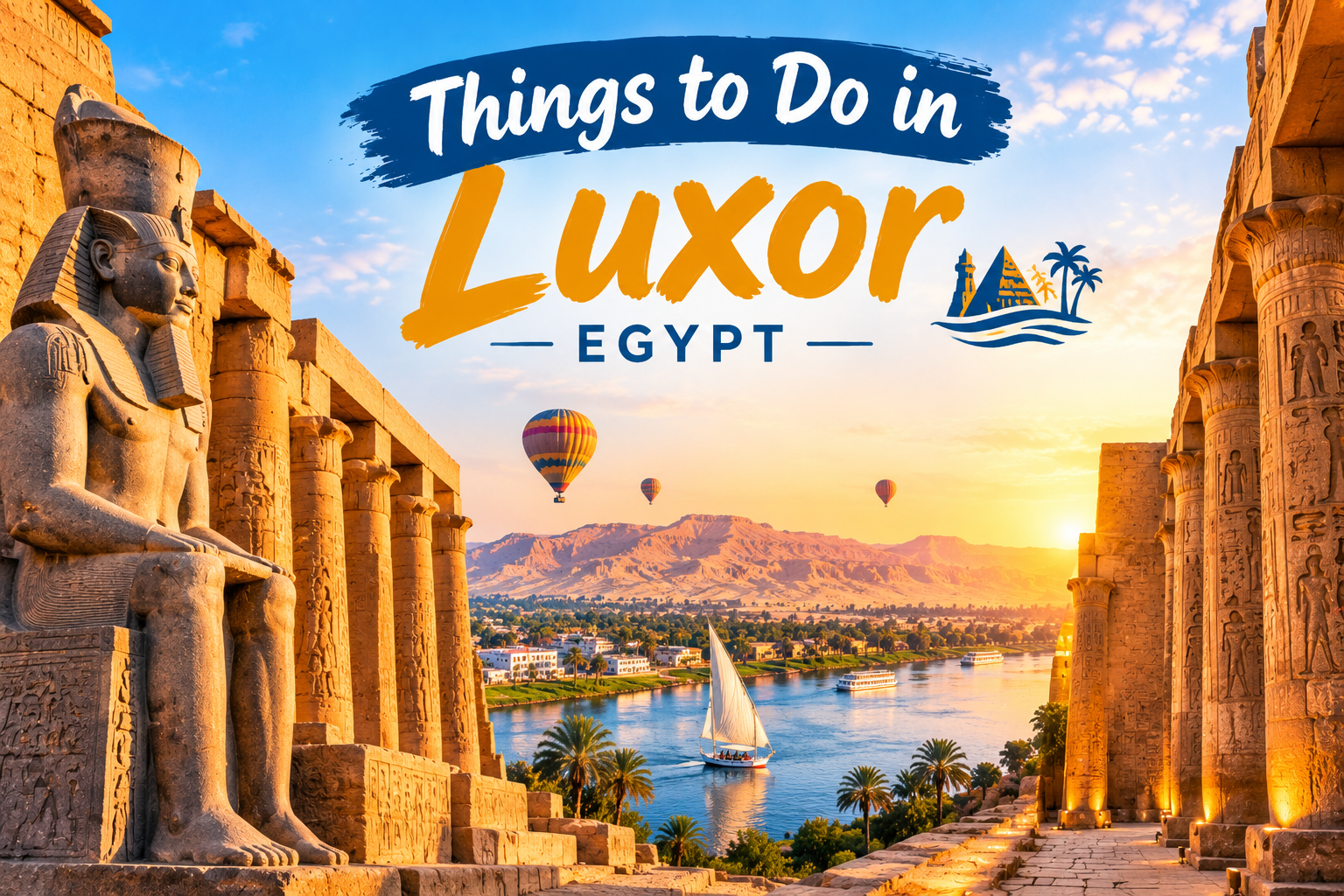
From the colossal pillars of Karnak to the hidden tombs of the Valley of the Kings, discover the best things to do in Luxor — with insider tips, sample itineraries, and answers to every question first-time visitors ask.
Why Luxor Deserves More Than a Quick Stopover
If Cairo is the chaotic, beating heart of modern Egypt, and Aswan is its tranquil, scenic soul, then Luxor is undeniably its monumental spirit. Known in antiquity as Thebes, Luxor is frequently described as the world’s greatest open-air museum, and for good reason. Sitting on the banks of the Nile, the city and its surrounding necropolises contain an astonishing concentration of ancient monuments, temples, and tombs that span the peak of the Pharaonic era, particularly the New Kingdom (c. 1550–1070 BC). It was here that the pharaohs of the 18th, 19th, and 20th dynasties—names like Hatshepsut, Thutmose III, Amenhotep III, and Ramses II—projected their power, wealth, and divine authority in stone on a scale that remains unmatched anywhere else on Earth.
Many travelers rushing through a standard 7-day Egypt itinerary treat Luxor as a two-day checkpoint: a rushed morning on the West Bank and a hurried afternoon on the East Bank before boarding a cruise ship. While this allows you to see the headline sites, it does a disservice to the sheer depth of the city. Luxor rewards a slower, more deliberate pace. The difference between a rushed tour and a well-planned three-day stay is the difference between merely looking at old stones and actually understanding the religious, political, and artistic zenith of ancient Egyptian civilization. Here, you can watch the sunrise paint the Theban mountains in hues of gold and purple from a hot air balloon, lose yourself in the forest of pillars at Karnak, and stand in the brightly painted, deeply personal tombs of the Valley of the Kings.
Whether you are building a Nile cruise versus a land tour comparison, planning a short 5-day trip, or organizing a comprehensive 14-day Egypt itinerary, this guide walks you through everything worth doing in Luxor. Organized by the traditional East and West banks, interest, and time available, it provides realistic timing, ticket advice, and the practical details that generic travel blogs tend to skip, helping you build a day plan that actually works.
1. Explore the Massive Karnak Temple Complex
No list of things to do in Luxor can start anywhere other than the awe-inspiring Karnak Temple. This is not just a single temple; it is the largest ancient religious complex in the world, a sprawling city of the gods that was continuously built, expanded, and modified by pharaohs over a period of nearly 2,000 years, from the Middle Kingdom through the Ptolemaic period. Dedicated primarily to the Theban triad of Amun, his consort Mut, and their son Khonsu (the moon god), Karnak is a masterclass in ancient Egyptian architecture and a testament to the immense wealth and power of the New Kingdom pharaohs.
The undisputed highlight of the complex is the Great Hypostyle Hall, built primarily by Seti I and Ramses II. Covering an area of 5,000 square meters, the hall features 134 massive sandstone pillars arranged in 16 rows. The 12 central columns are colossal, standing 21 meters (69 feet) high and topped with open papyrus capitals wide enough to hold 100 people. Walking through this forest of stone, especially when the morning light filters through the clerestory roof and illuminates the vibrant, faded hieroglyphs and original paint traces on the ceiling, is one of the most profoundly moving experiences in all of Egypt.
Beyond the Hypostyle Hall, the complex offers endless exploration. You can marvel at the towering First Pylon and the unfinished obelisk of Hatshepsut in the sacred central area, walk along the Avenue of Sphinxes that once connected Karnak to Luxor Temple, and contemplate the serene, reflective waters of the Sacred Lake, where the priests of Amun purified themselves before entering the inner sanctuaries. The small Sacred Lake is also home to a giant granite scarab beetle dedicated to the sun god Khepri, which legend says brings good luck to those who walk around it three times.
Practical tips for visiting Karnak
- Timing is everything: Karnak is massive and offers very little shade. Arrive right at opening time (usually 6:00 AM) to beat the tour buses and the midday heat, or visit in the late afternoon just before closing. The light at golden hour makes the sandstone glow.
- Sound and Light Show: If you are staying in Luxor for more than one night, attending the Karnak Sound and Light Show after dark is highly recommended. The temples are dramatically illuminated, and the narration brings the history of the site to life in a way that daytime visits cannot match.
- Hire a guide: Because Karnak was built and modified by dozens of pharaohs over millennia, the layout can be confusing. A licensed Egyptologist guide is invaluable for explaining the different construction phases, the meaning of the reliefs, and the religious significance of the various courts and chapels.
- Wear comfortable shoes: You will be walking several kilometers over uneven stone, sand, and rubble. Sturdy, broken-in walking shoes are an absolute must.
2. Wander the Elegant Luxor Temple in the City Center
Unlike Karnak, which sits a few kilometers outside the modern city center, the Luxor Temple is located right in the heart of modern-day Luxor, along the bustling Nile corniche. This proximity means you can easily visit it in the early morning, late afternoon, or even after dark, making it one of the most accessible major monuments in the country. Built primarily by Amenhotep III and Ramses II, the temple was dedicated to the rejuvenation of kingship and the Theban triad of gods. It was here that many pharaohs were crowned, and it served as the southern terminus of the grand processional avenue that connected it to Karnak.
The approach to the temple is striking. Originally, an avenue of sphinxes lined the processional route (many of which are now being excavated and reinstalled by modern archaeologists). At the entrance, you are greeted by a massive First Pylon built by Ramses II, flanked by a single standing colossal statue of the pharaoh and a towering granite obelisk. (Its twin was given to France in the 1830s and now stands in the Place de la Concorde in Paris). Passing through the pylon, you enter the grand peristyle court of Ramses II, surrounded by double rows of papyrus-bundle columns, which leads into the elegant, sunlit colonnade of Amenhotep III.
One of the most fascinating aspects of Luxor Temple is its continuous use over millennia. As the centuries passed and the temple was buried under sand and debris, different cultures built directly on top of it. You can see the remains of a Roman fort built around the temple’s enclosure, and most remarkably, the Mosque of Abu Haggag, a functioning Islamic place of worship built in the 13th century, sits perched directly on top of the ancient temple’s roof. The mosque was only recently raised to allow excavations to proceed beneath it, creating a unique, tangible layering of three major world religions in a single physical space.
3. Descend into the Valley of the Kings
Leaving the fertile Nile Valley and crossing into the arid, limestone cliffs of the West Bank, you enter the Valley of the Kings. This hidden, desolate wadi served as the primary burial ground for the pharaohs of the New Kingdom for nearly 500 years. Unlike their predecessors, who built massive, highly visible pyramids that practically invited tomb robbers, the New Kingdom pharaohs chose to carve their tombs deep into the solid rock of the valley, hiding their entrances and hoping to protect their bodies and vast treasures for eternity. While almost all of them were looted in antiquity, the sheer scale, architectural complexity, and breathtaking decoration of the surviving tombs remain unparalleled.
A standard entrance ticket allows you to visit three tombs of your choice from the open roster. For most first-time visitors, the absolute must-sees are the Tomb of Ramses V/VI (KV9), famous for its incredibly well-preserved, vibrant astronomical ceiling and deep, sprawling corridors; the Tomb of Amenhotep II (KV35), which still contains the original basalt sarcophagus and the mummy of the pharaoh (with his arm raised, a detail that always fascinates visitors); and the Tomb of Ramses IV (KV2), which features massive, deeply carved hieroglyphs and a classic, straight-axis layout.
Of course, the most famous tomb in the valley is KV62, the resting place of the boy king Tutankhamun. Discovered by Howard Carter in 1922, it is the only nearly intact royal tomb found in the valley. While the treasure was moved to the Egyptian Museum in Cairo (and now the Grand Egyptian Museum), the tomb itself is open to visitors. It is surprisingly small and relatively undecorated compared to other royal tombs, likely because it was originally intended for a non-royal and was hastily adapted for the young king after his unexpected death. However, standing in the actual burial chamber where the golden sarcophagus once rested is a deeply emotional experience for history lovers.
For those willing to pay a premium for a separate, specialized ticket, the Tomb of Seti I (KV17) is the undisputed masterpiece of the valley. The longest, deepest, and most beautifully decorated tomb in the necropolis, its walls feature exquisite, finely carved reliefs and the first complete depiction of the Book of the Heavens on the ceiling. It is an absolute must for serious enthusiasts.
Practical tips for the Valley of the Kings
- Photography rules: Photography tickets used to be required, but rules have recently relaxed, allowing basic photography without flash in most standard tombs. However, tripods and flash are strictly prohibited. Always check the current rules at the ticket office, as regulations can change.
- Beat the crowds and heat: The valley acts like a natural oven, trapping heat. Arrive as early as possible (the gates open at 6:00 AM). Not only is the temperature much more bearable, but you will also have the most popular tombs largely to yourself before the cruise ship buses arrive around 9:00 AM.
- Beware of the “guides”: Inside the tombs, you will be approached by locals offering to show you “secret” areas or act as a guide. Ignore them. Only your official, ticketed Egyptologist guide or the designated site inspectors (who wear official uniforms and do not ask for tips) are allowed to give information.
- Hydration and footwear: Bring more water than you think you need. The air is incredibly dry, and the descent into the tombs can be steep and slippery. Wear shoes with excellent grip.
4. Marvel at the Mortuary Temple of Hatshepsut at Deir el-Bahari
Set against the dramatic, sheer limestone cliffs of Deir el-Bahari, the Mortuary Temple of Hatshepsut (known in antiquity as Djeser-Djeseru, meaning “Holy of Holies”) is an architectural marvel that stands in stark contrast to the traditional, massive, pylon-based temples of her male counterparts. Hatshepsut, one of the few female pharaohs in Egyptian history, ruled during the 18th Dynasty and oversaw a period of immense prosperity and peace. She commissioned her royal architect, Senenmut, to design a temple that harmonized perfectly with the natural landscape, resulting in a stunning, modern-looking structure featuring three massive, terraced colonnades that blend seamlessly into the towering cliffs behind them.
The temple is not just beautiful; it is a masterclass in political propaganda. The walls of the second and third terraces are covered in exquisite, deeply carved reliefs that tell the story of Hatshepsut’s divine birth (claiming the god Amun himself was her father) and her most famous achievement: a highly lucrative trading expedition to the mysterious Land of Punt (likely modern-day Somalia or the Horn of Africa). The reliefs depict the Puntites, their unique beehive-shaped houses, and the exotic goods they brought back, including gold, ivory, ebony, and living myrrh trees with their root balls intact, which Hatshepsut had planted in the temple’s gardens.
As you walk up the central ramp to the upper terrace, you pass through the Sanctuary of Amun and the Solar Cult complex. The sheer scale of the architecture, combined with the dramatic backdrop of the Theban mountains, makes this one of the most photogenic and awe-inspiring sites on the West Bank. It is highly recommended to visit this site with a guide, as the complex history of Hatshepsut’s reign, her relationship with her stepson Thutmose III, and the subsequent attempts to erase her name from history are fascinating and require context to fully appreciate.
5. Stand Before the Colossi of Memnon
Located on the West Bank, near the edge of the cultivation line, the Colossi of Memnon are two massive, seated stone statues that stand as the only remaining fragments of what was once the largest and most opulent mortuary temple ever built in Egypt: the Mortuary Temple of Amenhotep III. Each statue stands an imposing 18 meters (60 feet) tall and weighs an estimated 720 tons. They depict Amenhotep III (who ruled during the zenith of the 18th Dynasty) sitting on a throne, with his hands resting on his knees, looking out toward the rising sun and the Nile. The sides of the thrones are intricately carved with depictions of the Nile god Hapi tying together the lotus and papyrus, symbolizing the unification of Upper and Lower Egypt.
The statues get their curious name from the ancient Greeks and Romans. Following a massive earthquake in 27 BC, the northern statue cracked and collapsed. According to ancient writers, the damaged stone would “sing” or emit a musical, plaintive sound at dawn, likely caused by the rising heat and expanding moisture in the porous quartzite. The Greeks associated this sound with the mythological King Memnon, who was killed in the Trojan War and was said to greet his mother, the dawn goddess Eos, each morning. The “singing” attracted tourists from across the Roman Empire, including emperors, who came to hear the oracle. However, after the Roman Emperor Septimius Severus repaired the statue in the 3rd century AD to appease the gods, the singing mysteriously stopped forever.
Today, the Colossi are a quick but essential stop on any West Bank itinerary. They offer a profound sense of scale and a poignant reminder of the impermanence of even the greatest human achievements. The site is free to enter, and you can walk right up to the base of the statues to appreciate the sheer size of the carved stone and the tiny scale of the modern visitors standing beside them.
6. Soar Over the West Bank in a Hot Air Balloon at Sunrise
While exploring the temples and tombs on foot is essential, experiencing the Theban landscape from the sky is arguably the most magical thing you can do in Luxor. A Luxor hot air balloon ride at sunrise offers a breathtaking, bird’s-eye view of the Nile River, the lush green agricultural fields of the East Bank, and the stark, golden, tomb-studded mountains of the West Bank. It provides a geographical context that simply cannot be grasped from the ground, showing you exactly why the ancient Egyptians chose this specific location as the gateway to the afterlife.
The experience begins before dawn. You will be picked up from your hotel around 4:30 AM and driven across the river to the launch site in the desert. As the sky begins to turn a deep, bruised purple, the massive envelope of the balloon is inflated with cold air, and then the burners roar to life, filling it with hot, glowing air. As you lift off, the silence of the desert is broken only by the occasional blast of the burner and the shouts of the pilot. As the sun crests the eastern mountains, it bathes the Valley of the Kings, the Temple of Hatshepsut, and the sprawling green ribbon of the Nile in a spectacular, golden light.
Flights typically last between 45 minutes to an hour, followed by a traditional champagne (or fruit juice) toast and the presentation of a flight certificate. For those interested in Egypt outdoor activities, this is the pinnacle experience. It is highly recommended to book a “private” or “VIP” flight, which limits the basket to 8-10 people, rather than the standard commercial flights that can cram 20+ people into a single basket, ensuring a more comfortable and exclusive experience.
7. Discover the Luxor Museum and the Mummification Museum
After days spent looking at massive stone monuments, taking a break to explore Luxor’s world-class museums provides crucial context and a chance to cool down in air-conditioned comfort. The Egyptian museums in Luxor are exceptionally well-curated, beautifully lit, and far less crowded than their counterparts in Cairo.
The Luxor Museum, located gracefully along the Nile corniche between Luxor Temple and the winter palace hotels, houses a superb collection of artifacts found in the Theban area. Unlike the chaotic, floor-to-ceiling crammed display style of the old Cairo museum, the Luxor Museum is spacious and elegant. Highlights include the beautifully restored statues from the cache at Luxor Temple, the stunning painted sandstone wall from the chapel of Thutmose III, and the remarkable cache of royal mummies discovered at Deir el-Bahari, which includes the bodies of powerful pharaohs like Thutmose I, Thutmose II, and Ramses I. The museum also features a dedicated room for the treasures recovered from the tomb of Tutankhamun, including the iconic calcite vase and the golden head of the pharaoh.
Just a short walk away is the Mummification Museum, a small but fascinating institution dedicated entirely to the ancient Egyptian art of preserving the dead. It provides a deep dive into the complex, 70-day mummification process, displaying the actual tools used by the embalmers, canopic jars, amulets, and the Book of the Dead. The museum also features the mummies of animals, including cats, crocodiles, and a remarkably well-preserved fish, demonstrating that the journey to the afterlife was not just for humans. It is a macabre but deeply educational stop that perfectly complements a visit to the Valley of the Kings.
8. Experience Luxor After Dark: Sound, Light, and Nightlife
When the sun sets and the intense heat of the day breaks, Luxor transforms. The city’s nightlife is relatively subdued compared to Cairo, focusing more on cultural experiences, dining, and atmospheric evening excursions rather than loud clubs. The Nile corniche comes alive with locals taking evening strolls, families enjoying ice cream, and the gentle hum of horse-drawn carriages.
The undisputed highlight of Egypt at night in Luxor is the Sound and Light shows. As mentioned, the Karnak Sound and Light Show is spectacular, but the Medinet Habu Sound and Light Show (held at the mortuary temple of Ramses III on the West Bank) is equally impressive and far more intimate. The temples are bathed in colored lights, and the narration echoes through the ancient courtyards, bringing the stories of pharaohs and gods to life against the backdrop of the dark, starry desert sky.
For dining, Luxor offers a wide range of options, from high-end hotel restaurants serving international cuisine to local eateries serving popular Egyptian foods. A dinner cruise on a traditional felucca or a motorized dahabiya is a wonderful way to spend an evening, enjoying a multi-course meal while gliding past the illuminated temples and the glowing city skyline. For those interested in cultural experiences in Egypt, some local cultural centers and hotels host traditional Nubian and Upper Egyptian music and Tanoura dance performances, offering a vibrant glimpse into the living folklore of the region.
9. Things to Do in Luxor With Family and Kids
Luxor is an incredible destination for families, provided the trip is paced correctly. The sheer scale of the monuments, the mystery of the hidden tombs, and the visual spectacle of the temples are guaranteed to capture the imagination of children and teenagers alike. The Valley of the Kings feels like a real-life Indiana Jones adventure, while the colossal statues at Karnak and the Colossi of Memnon provide a sense of awe that resonates with all ages.
However, the biggest challenge when taking kids to Egypt is the heat and the walking. Temple complexes are vast, and there is very little shade. To make the trip enjoyable for younger travelers, plan to visit the major sites early in the morning (starting at 6:00 AM) and retreat to the hotel for a pool break and a long lunch during the hottest part of the day (12:00 PM to 3:00 PM). Resume sightseeing in the late afternoon.
Many families choose to experience Luxor as part of a family Nile cruise. A cruise ship acts as a floating, air-conditioned hotel that moves between Luxor and Aswan, eliminating the need to pack and unpack, and providing a safe, familiar base with swimming pools, kid-friendly buffets, and onboard entertainment. When on the West Bank, hiring a private, air-conditioned vehicle with a driver who can wait near the sites is essential to minimize walking in the sun.
10. Sample Luxor Itineraries: 1, 2, or 3 Days
How you structure your time in Luxor depends on your broader travel plans. Below are three realistic frameworks to help you maximize your experience without burning out.
24 Hours in Luxor
If you only have one day, you must prioritize the absolute highlights. Start at 6:00 AM with a private guide on the West Bank. Visit the Valley of the Kings (choose 3 tombs, including Ramses V/VI), followed by a quick stop at the Temple of Hatshepsut and the Colossi of Memnon. Cross back to the East Bank for lunch. In the afternoon, explore the massive Karnak Temple Complex. If time permits, walk through Luxor Temple just before sunset. This pace is extremely tight and exhausting, so booking a comprehensive, well-organized Luxor day tour with a private driver and guide is highly recommended to manage logistics and ticket lines efficiently.
2 Days in Luxor
With two days, the pace becomes much more comfortable and enjoyable. Dedicate Day One entirely to the West Bank. Start early at the Valley of the Kings, spend a longer, more relaxed period at the Temple of Hatshepsut, and visit the Ramesseum or Medinet Habu in the late morning. Return to the hotel for a midday break. In the late afternoon, take a hot air balloon ride (if you didn’t do it on day one) or enjoy a sunset felucca ride on the Nile. Day Two is dedicated to the East Bank. Spend a solid three hours exploring the sprawling Karnak Temple, visit the Luxor Museum, and conclude with a guided tour of Luxor Temple in the late afternoon or evening when the lighting is spectacular.
3+ Days in Luxor
With three or more days, you can truly immerse yourself in the Theban landscape. Use the extra time to explore the “lesser-known” sites on the West Bank, such as the Tombs of the Nobles (which offer incredible, colorful scenes of daily ancient Egyptian life), the Ramesseum, and the beautifully preserved Medinet Habu. You can also take a day trip north to the ancient site of Abydos to see the magnificent Temple of Seti I, or south to Esna and Edfu. A longer stay also allows you to simply enjoy the city, spending an unhurried afternoon reading by the pool at a historic hotel, or enjoying a long, relaxed dinner at a riverside restaurant. For those integrating Luxor into a broader trip, it perfectly anchors a 10-day Egypt itinerary.
11. Practical Information for Visiting Luxor
Getting to and around Luxor
Luxor is highly accessible. Most international visitors arrive via a short, one-hour domestic flight from Cairo, or by taking the overnight sleeper train, which is a classic Egyptian travel experience. If you are doing a Nile River cruise, Luxor is typically the starting or ending point of the journey.
Within the city, the East Bank is easily navigable by taxi, Uber, or Careem. However, to visit the West Bank, you must cross the Nile. While there are local ferries, the most convenient and safe method for tourists is to hire a private car with a driver for the day, or join an organized tour. The West Bank has very few public transport options, and the sites are spread out over several kilometers. When planning a trip to Egypt, securing reliable transport for the West Bank is a top priority.
Visas and entry requirements
As with the rest of the country, you will need an Egypt entry visa. This can be purchased on arrival at Cairo International Airport or applied for in advance. To save time and avoid the queues at the airport, it is highly recommended to apply for an Egypt e-visa online before your departure.
When to visit
Luxor is significantly hotter than Cairo, especially in the summer. The best time to travel to Egypt and specifically Luxor is between October and April, when daytime temperatures are pleasant and ideal for exploring the open-air temples. During the peak of summer (June to August), temperatures regularly exceed 40°C (104°F), making midday sightseeing on the West Bank virtually impossible. If you are traveling during the shoulder seasons, check specific guides for January weather (which can be surprisingly chilly in the mornings) or July weather. Be aware that visiting during Ramadan in Egypt will affect daytime dining options and the general pace of the city.
Money, tipping, and food
While credit cards are accepted at major hotels and some larger restaurants, cash is king in Luxor. You will need Egyptian pounds in small denominations for buying water, paying for restroom attendants, tipping your guide and driver, and purchasing small souvenirs. Understanding tipping etiquette in Egypt is crucial; a general rule of thumb is to tip your Egyptologist guide 10-15% of the tour cost, your driver 5-10%, and smaller amounts (10-20 EGP) for bathroom attendants and small services. When eating, be sure to try local Upper Egyptian specialties, including fresh river fish, pigeon, and the incredibly sweet, locally grown dates and sugar cane.
Safety and common scams
Luxor is generally very safe for tourists, and the local economy is heavily dependent on tourism, meaning the community is highly protective of visitors. However, the high concentration of sites means a high concentration of vendors and touts. Be aware of common tourist scams in Egypt, such as locals at the Valley of the Kings claiming a tomb is “closed” and offering to take you to a “better, secret” one for a fee (it is not closed, and they are not authorized). Always verify information with your official guide. For more detailed advice, especially for women traveling alone, review our guide on solo female travel safety in Egypt.
What to pack
The golden rule for packing for Luxor is sun protection and modesty. The sun is incredibly intense, so a wide-brimmed hat, UV-blocking sunglasses, and high-SPF sunscreen are non-negotiable. Clothing should be lightweight, breathable (cotton or linen), and modest out of respect for local customs (covering shoulders and knees is recommended, especially if you plan to visit any active mosques or local villages). Sturdy, comfortable walking shoes with good grip are essential for the uneven, dusty terrain of the West Bank tombs. For a complete checklist, consult our Egypt packing list.
12. Beyond the Highlights: Lesser-Known Things to Do in Luxor
Once you have ticked off the major sites, Luxor offers a wealth of quieter, less-visited Egypt hidden gems that provide a deeper, more intimate connection to ancient history. These sites are often completely free of tour groups, allowing you to explore in peaceful solitude.
On the West Bank, the Temple of Medinet Habu (the mortuary temple of Ramses III) is arguably the best-preserved and most visually stunning temple in the area, yet it receives a fraction of the visitors of Karnak. Its massive, fortress-like entrance and the incredibly vibrant, well-preserved reliefs detailing Ramses’ victory over the Sea Peoples are breathtaking. Nearby, the Tombs of the Nobles at Dra’ Abu el-Naga and Qurnet Murai offer a fascinating contrast to the royal tombs. While the pharaohs’ tombs focus on religious texts and the afterlife, the nobles’ tombs are decorated with vivid, colorful scenes of daily life: farming, hunting, fishing, banquets, and family life, providing a window into how the ancient Egyptians actually lived.
Another remarkable site is Deir el-Medina, the ancient workers’ village where the artisans who built the Valley of the Kings lived. The site includes the remains of houses, a local temple, and several small, beautifully decorated tombs of the workers themselves. The reliefs here are incredibly personal and detailed, offering a unique perspective on the community that built the pharaohs’ monuments. For those interested in archaeological sites in Egypt, these lesser-known West Bank locations are an absolute must.
Frequently Asked Questions About Things to Do in Luxor
How many days do I need in Luxor?
Two full days is the minimum recommended time to see the major highlights of both the East and West Banks without feeling completely exhausted. Three days is ideal, as it allows you to explore the lesser-known sites, take a hot air balloon ride, and absorb the history at a more relaxed pace.
What is the difference between the East Bank and the West Bank?
The East Bank of the Nile was associated with the rising sun, life, and the living. This is where the major temples (Karnak and Luxor) and the modern city are located. The West Bank was associated with the setting sun, death, and the afterlife. This is where the royal tombs (Valley of the Kings) and mortuary temples (Hatshepsut, Colossi) are located.
Is the hot air balloon ride in Luxor safe?
Yes, hot air ballooning in Luxor is highly regulated and generally very safe. Pilots are licensed, and the balloons undergo regular maintenance. To ensure the highest safety standards and a better experience, book a “VIP” or “private” flight with a reputable, high-end operator rather than the cheapest standard option.
Can I visit the Valley of the Kings independently?
Yes, you can buy a ticket at the gate and explore the standard tombs independently. However, because the tombs are dark, the hieroglyphs are complex, and the history is dense, hiring a licensed Egyptologist guide is highly recommended. A guide will use a flashlight to point out specific details and explain the religious texts, transforming the visit from a simple walk through dark holes into a profound historical experience.
What should I avoid doing in Luxor?
Avoid visiting the West Bank tombs between 11:00 AM and 3:00 PM during the summer months; the heat is dangerous. Avoid accepting “free” gifts or unsolicited help from locals at the sites, as this will inevitably result in a demand for money. Finally, avoid touching the ancient reliefs and paintings inside the tombs; the oils and moisture from your skin can cause irreversible damage to thousands of years of history.
Is Luxor worth visiting if I am short on time in Egypt?
Absolutely. If you only have a few days in Egypt, Luxor (along with Cairo and the Pyramids) should be at the top of your list. The concentration of world-class ancient Egyptian temples and landmarks in Egypt here is unmatched. Even a single, well-planned day in Luxor will provide memories and historical insights that will last a lifetime.
Ready to Explore the Ancient Wonders of Luxor?
Whether you are looking for a comprehensive Luxor day tour, a luxury Egypt tour, or a fully customized Egypt tailor-made holiday, we are here to help. Enjoy private Egyptologist guides, skip-the-line access, comfortable air-conditioned transport, and unforgettable experiences designed around your exact interests.