
Egypt Itinerary 15 Days: The Perfect Two-Week Egypt Adventure
A well-planned Egypt itinerary for 15 days gives you enough time to experience the country’s greatest ancient monuments, cruise the Nile, discover Nubian culture, visit Abu Simbel, and finish your journey with time beside the Red Sea.
Instead of rushing from one attraction to another, fifteen days allows you to enjoy Egypt at a much more comfortable pace. You can spend several days exploring Cairo, discover the temples and tombs of Luxor, sail south toward Aswan, experience the atmosphere of Nubian culture, visit the extraordinary temples of Abu Simbel, and relax in Hurghada before returning home.
If you are still deciding how to organize your vacation, our guide on
how to plan a trip to Egypt
can help you prepare before choosing your final route.
This itinerary works especially well for first-time visitors, couples, families, solo travelers, and anyone looking for a balanced combination of history, culture, sightseeing, Nile scenery, and relaxation.
Egypt Itinerary 15 Days at a Glance
This suggested route follows:
Cairo → Luxor → Nile Cruise → Aswan → Abu Simbel → Hurghada → Cairo.
| Day | Destination | Main Experience |
| Day 1 | Cairo | Arrival and hotel check-in |
| Day 2 | Cairo | Pyramids of Giza and Grand Egyptian Museum |
| Day 3 | Cairo | Old Cairo, Saladin Citadel and Khan El Khalili |
| Day 4 | Luxor | Travel from Cairo to Luxor |
| Day 5 | Luxor | Valley of the Kings, Karnak and Luxor Temple |
| Day 6 | Nile Cruise | Embarkation in Luxor |
| Day 7 | Nile Cruise | Edfu Temple |
| Day 8 | Nile Cruise | Kom Ombo Temple |
| Day 9 | Aswan | Arrival and Aswan sightseeing |
| Day 10 | Aswan | Philae Temple and Nile experience |
| Day 11 | Aswan | Nubian Village and felucca sailing |
| Day 12 | Abu Simbel | Abu Simbel Temples |
| Day 13 | Hurghada | Travel to the Red Sea |
| Day 14 | Hurghada | Snorkeling, diving or beach relaxation |
| Day 15 | Cairo | Return and international departure |
This itinerary is flexible. Hotel choices, domestic flights, Nile cruise schedules, international arrival times, and your preferred travel style may change the exact order of activities.
Days 1–3: Discover Cairo
Three days in Cairo provides a strong introduction to Egypt because the city represents several different periods of the country’s history.
You can experience the monuments of ancient Egypt, world-famous archaeological collections, Islamic architecture, Christian heritage, traditional markets, and modern Egyptian city life.
For additional ideas, see our complete
Cairo travel itinerary.
Day 1 – Arrive in Cairo
Your first day should be simple and comfortable, especially after a long international flight.
After arriving at
Cairo International Airport,
transfer to your hotel and take time to rest.
Depending on your arrival time, you can spend the evening enjoying dinner, relaxing at your hotel, or taking a gentle introduction to the city.
If you arrive early and still have energy, consider enjoying the Nile or exploring some of the options in our guide to
Cairo at night.
Day 2 – Pyramids of Giza and Grand Egyptian Museum
Your first full sightseeing day begins with one of the world’s most extraordinary archaeological landscapes: the
Pyramids of Giza.
Explore the Great Pyramid of Khufu, the Pyramid of Khafre, the Pyramid of Menkaure, the Great Sphinx, and the panoramic viewpoints around the Giza Plateau.
The Great Pyramid is especially significant as the largest pyramid at Giza and the only surviving Wonder of the Ancient World.
After Giza, continue to the
Grand Egyptian Museum.
Combining the pyramids and the museum creates one of the most rewarding sightseeing days in Egypt. The monuments allow you to experience ancient Egyptian architecture on an enormous scale, while the museum provides greater historical and archaeological context.
Travelers who prefer an organized sightseeing experience can also explore our
Cairo day tours.
Day 3 – Old Cairo, Saladin Citadel and Khan El Khalili
Your third day introduces you to another side of Cairo.
Begin by exploring
Old Cairo,
an area connected with centuries of religious and cultural history.
Depending on your interests, you may also include
Coptic Cairo
and the famous
Hanging Church.
Continue toward the
Saladin Citadel,
one of Cairo’s most important historic landmarks.
You can also explore more of
Islamic Cairo
before finishing your sightseeing around
Khan El Khalili Bazaar.
The market is an excellent place to browse handicrafts and souvenirs, explore narrow historic streets, or simply sit at a café and watch Cairo’s daily life.
If you want to experience the market later in the evening, read our guide to
Khan El Khalili at night.
Days 4–5: Luxor and Ancient Thebes
After Cairo, travel south to
Luxor.
Known in ancient times as Thebes, Luxor contains some of Egypt’s most important temples, tombs, monuments, and archaeological landscapes.
Day 4 – Travel from Cairo to Luxor
You can travel from Cairo to Luxor by domestic flight or train.
Flying is generally the faster choice, while travelers who prefer an overland experience may consider the train.
You can learn more about overnight rail travel in our guide to the
Egypt sleeper train.
After arriving in Luxor, check into your hotel and keep the rest of the day relatively relaxed.
You can walk beside the Nile, enjoy a felucca ride, explore the Corniche, or visit Luxor Temple later in the day.
Day 5 – Valley of the Kings, Karnak and Luxor Temple
Your first full day in Luxor should focus on its extraordinary archaeological sites.
Begin on the West Bank with the
Valley of the Kings.
This famous royal necropolis contains tombs created for rulers of Egypt’s New Kingdom.
Continue to the
Temple of Hatshepsut,
an impressive monument dramatically positioned beneath the cliffs at Deir el-Bahari.
You can also stop at the
Colossi of Memnon
before crossing back toward Luxor’s East Bank.
In the afternoon, explore
Karnak Temple,
one of Egypt’s largest and most important temple complexes.
Finish the day at
Luxor Temple,
which can be especially atmospheric later in the afternoon or evening.
Days 6–9: Nile Cruise From Luxor to Aswan
A Nile cruise is one of the highlights of a two-week Egypt vacation.
Instead of repeatedly packing, checking into hotels, and traveling by road, your ship becomes both your accommodation and transportation while you sail through the Nile Valley.
Explore our
Egypt Nile River cruise
options if you would like to include this experience in your vacation.
You can also read our
Nile cruise itinerary guide
to understand how the typical journey is organized.
Day 6 – Board Your Nile Cruise in Luxor
Board your Nile cruise in Luxor and settle into your cabin.
This part of the itinerary creates a welcome change of pace after several intensive sightseeing days.
As the ship travels south, enjoy views of villages, palm trees, agricultural fields, desert landscapes, and life along the Nile.
If you are deciding whether cruising is right for you, our
Nile cruise vs. land tour
comparison may help.
Day 7 – Visit Edfu Temple
Your next major archaeological stop is
Edfu Temple.
Dedicated to the god Horus, the temple is famous for its monumental entrance, extensive reliefs, courtyards, and remarkably well-preserved architecture.
After your visit, return to the cruise and continue sailing south.
Day 8 – Visit Kom Ombo Temple
Continue to
Kom Ombo Temple,
dramatically positioned beside the Nile.
The temple has an unusual symmetrical design associated with the worship of two different deities, making it distinctive among the monuments encountered along the cruise route.
After sightseeing, return to your ship and enjoy the rest of the journey toward Aswan.
Day 9 – Arrive in Aswan
Your Nile journey eventually brings you to
Aswan,
one of southern Egypt’s most beautiful and relaxed destinations.
The city’s atmosphere provides an excellent contrast with the busy streets of Cairo and the monument-filled landscape of Luxor.
Depending on your cruise schedule, sightseeing may begin immediately or continue the following morning.
Days 10–11: Explore Aswan and Nubian Culture
One of the advantages of having fifteen days in Egypt is being able to enjoy Aswan instead of immediately rushing onward.
Day 10 – Philae Temple and the Nile
Visit
Philae Island
and discover one of Aswan’s most memorable archaeological settings.
Reaching the temple by boat makes the experience particularly enjoyable, while the island location creates a very different atmosphere from many of Egypt’s desert archaeological sites.
After sightseeing, spend time enjoying the Nile.
A traditional felucca ride around Aswan can be a relaxing way to experience the surrounding landscape, particularly later in the afternoon.
For additional sightseeing options, explore our
Aswan day tours.
Day 11 – Nubian Village and Felucca Sailing
Dedicate your next day to culture and local experiences.
A visit to a
Nubian Village in Aswan
introduces you to colorful architecture, local traditions, crafts, food, and an important part of southern Egypt’s living cultural heritage.
This is a valuable addition to an itinerary that would otherwise focus almost entirely on ancient monuments.
Combining the visit with another felucca journey can create a slower and more relaxed day before traveling to Abu Simbel.
If culture is an important part of your trip, see our guide to
cultural experiences in Egypt.
Day 12: Visit Abu Simbel From Aswan
Day twelve is dedicated to one of southern Egypt’s most impressive archaeological destinations.
Why Visit Abu Simbel?
The
Temples of Abu Simbel
are among Egypt’s most recognizable ancient monuments.
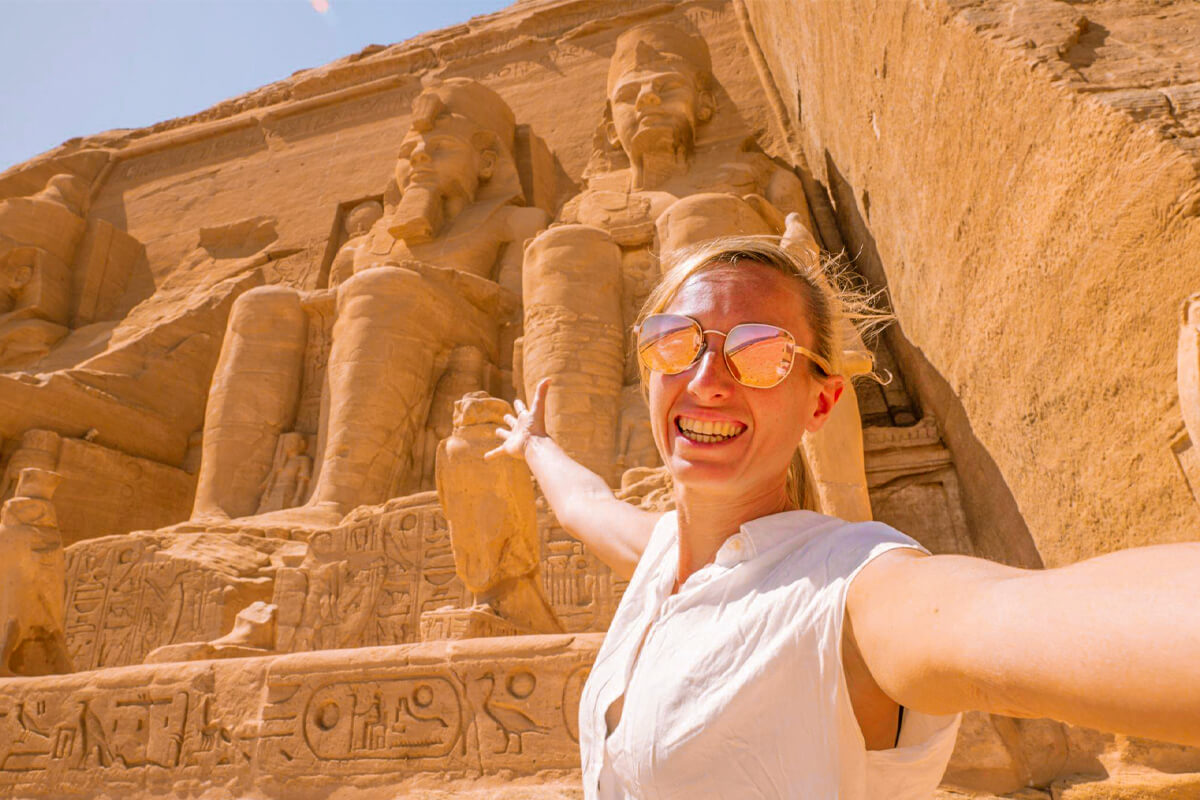
Built during the reign of Ramses II, the temples are famous for their enormous rock-cut façades and monumental statues.
The Great Temple is especially dramatic, with colossal seated figures of Ramses II dominating the entrance.
For travelers already spending several days in Aswan, including Abu Simbel adds an unforgettable final archaeological experience before moving toward the Red Sea.
Days 13–14: Hurghada and the Red Sea
After Cairo, Luxor, the Nile, Aswan, and Abu Simbel, it is time to slow down.
The final full part of your 15-day itinerary takes you toward Egypt’s
Red Sea.
Day 13 – Travel to Hurghada
Travel to Hurghada and check into your hotel or resort.
Do not feel that you need to organize another full sightseeing program immediately.
Spend the afternoon enjoying the beach, swimming pool, resort facilities, or a relaxed dinner.
The change of pace is an important part of making a longer Egypt itinerary enjoyable.
Day 14 – Snorkeling, Diving or Relaxation
Use your last full vacation day in whichever way suits you best.
The Red Sea is famous for clear water, coral reefs, marine life, and excellent opportunities for
snorkeling in Egypt.
More adventurous travelers may prefer
scuba diving in Egypt.
Alternatively, spend the entire day relaxing at your resort.
If you want organized activities, browse our
Hurghada day tours.
Day 15: Return to Cairo and Depart Egypt
Your final day depends largely on your international departure schedule.
If you have a later flight, enjoy a relaxed breakfast before beginning your journey back to Cairo.
Avoid adding complicated sightseeing plans unless you have plenty of time between your domestic transportation and international departure.
Always allow additional time for airport procedures and unexpected transportation delays.
How Much Does a 15-Day Egypt Trip Cost?
The cost of fifteen days in Egypt varies considerably depending on the type of vacation you choose.
The largest factors usually include:
- Hotel category
- Nile cruise category
- Domestic flights or train tickets
- Private or shared transportation
- Private guides
- Entrance tickets
- Abu Simbel transportation
- Red Sea activities
- Meals
- Personal expenses
For a detailed explanation, read our guide to
how much a trip to Egypt costs.
When comparing
Egypt vacation packages,
do not make your decision based only on the final price.
Hotel locations, guide quality, transportation standards, cruise category, sightseeing inclusions, and entrance fees can significantly affect the overall value of a package.
How to Make Your 15-Day Egypt Itinerary More Comfortable
The best itinerary is not necessarily the one containing the greatest number of attractions.
Planning transportation intelligently and leaving enough time to rest can make a major difference during a two-week vacation.
Use Private Transportation When It Saves Time
Private transportation can reduce waiting time between airports, hotels, archaeological sites, and cities.
It can be especially helpful for families, seniors, couples, and travelers who prefer greater flexibility.
Choose Your Nile Cruise Carefully
Do not compare Nile cruises based only on photographs.
Consider cabin type, itinerary, embarkation schedule, included sightseeing, meals, service standards, and the amount of time available at each destination.
Do Not Schedule Every Hour
Egypt contains enough archaeological attractions to fill months of travel.
Trying to see everything during one vacation can make the journey exhausting.
The slower days in Aswan and Hurghada provide important breaks between intensive sightseeing periods.
Pack for Different Environments
During this itinerary you may experience busy cities, archaeological sites, Nile cruising, desert environments, religious attractions, and Red Sea resorts.
Our
Egypt packing guide
can help you decide what clothing and travel essentials to bring.
What Is the Best Time for a 15-Day Egypt Trip?
For an itinerary involving extensive sightseeing in Cairo, Luxor, Aswan, and Abu Simbel, many travelers prefer the cooler parts of the year.
Temperature is particularly important in southern Egypt because many major archaeological attractions involve considerable outdoor walking.
Your travel dates should also take hotel availability, Nile cruise schedules, festivals, and Red Sea activities into consideration.
Read our complete guide to the
best time to travel to Egypt
before selecting your dates.
Why Choose a Private 15-Day Egypt Tour?
A private Egypt tour provides more flexibility than following a fixed group itinerary.
A Personalized Itinerary
Your journey can be adjusted according to your preferred travel pace, hotel category, interests, arrival dates, and sightseeing priorities.
You may want more time in Cairo, fewer days in Hurghada, additional nights on the Nile, or a completely different balance between culture and relaxation.
Our
tailor-made Egypt holidays
are designed around this type of flexibility.
Private Egyptologist Guides
An experienced Egyptologist guide can transform an archaeological visit from simply seeing monuments into understanding their history.
At places such as Karnak, the Valley of the Kings, Philae, and Abu Simbel, historical context helps explain the rulers, religion, architecture, symbols, and events behind what you are seeing.
Luxury Travel Options
Travelers looking for greater comfort can combine private sightseeing, premium hotels, upgraded transportation, and higher-category Nile cruises.
Explore our
luxury Egypt tours
for additional inspiration.
Is This 15-Day Egypt Itinerary Suitable for Families?
Yes. Fifteen days can work particularly well for families because it allows you to reduce the number of long sightseeing days and include additional rest time.
Families can adjust temple visits, add child-friendly activities, spend more time at the Red Sea, and organize private transportation between destinations.
See our
family Egypt tours
for more ideas.
Is This Itinerary Good for Solo Travelers?
The same route can also work extremely well for solo travelers.
Private guided sightseeing can make transportation easier, while the Nile cruise provides opportunities to meet other travelers without requiring you to join a large group itinerary for your entire vacation.
Browse our
Egypt solo tours
or read our guide to planning a
solo trip to Egypt.
Can You Add More Destinations?
Yes, but adding more destinations does not automatically create a better vacation.
Fifteen days already includes several significant travel days. Adding Alexandria, Siwa, Sharm El Sheikh, or another destination may require removing time from Cairo, Luxor, Aswan, or Hurghada.
If you would rather travel for slightly less time, compare this itinerary with our
14-day Egypt itinerary.
The best approach is to choose destinations according to your priorities rather than attempting to include every major city during one trip.
Final Thoughts on Spending 15 Days in Egypt
Fifteen days gives first-time visitors an excellent opportunity to experience the diversity of Egypt without turning the vacation into a constant race between cities.
You can stand beneath the Pyramids of Giza, explore the collections of the Grand Egyptian Museum, wander through historic Cairo, discover the tombs and temples of Luxor, sail the Nile, experience Nubian culture in Aswan, visit Abu Simbel, and finish beside the Red Sea.
The result is a journey that combines Egypt’s archaeological heritage with its landscapes, culture, people, and modern travel experiences.
If you are ready to organize your journey, explore our
Egypt vacation packages
or create your own itinerary with our
tailor-made Egypt holidays.
FAQs About an Egypt Itinerary for 15 Days
Is 15 days enough to see Egypt?
Yes. Fifteen days provides enough time to experience Cairo, Luxor, Aswan, Abu Simbel, a Nile cruise, and the Red Sea while maintaining a relatively comfortable pace.
What is the best 15-day Egypt itinerary?
For many first-time visitors, a balanced route is:
Cairo → Luxor → Nile Cruise → Aswan → Abu Simbel → Hurghada → Cairo.
This route combines Egypt’s most important archaeological attractions with Nile scenery, local culture, and Red Sea relaxation.
How many days should I spend in Cairo?
Three days is a good starting point for first-time visitors. It provides enough time for the Giza Pyramids, Grand Egyptian Museum, Old Cairo, Islamic Cairo, and Khan El Khalili without making the schedule excessively rushed.
How many days should I spend in Luxor?
At least two days is recommended for the major attractions, although travelers with a strong interest in ancient Egyptian history may prefer three or more days.
Is a Nile cruise worth including?
For many travelers, yes. A Nile cruise combines accommodation, transportation, sightseeing, scenery, and relaxation while connecting Luxor, Edfu, Kom Ombo, and Aswan.
Should I visit Abu Simbel from Aswan?
Abu Simbel is particularly worthwhile for travelers interested in ancient Egyptian history and Ramses II. Its monumental rock-cut temples are among the most impressive archaeological sites in southern Egypt.
Is Hurghada worth adding to the itinerary?
Yes, especially after more than ten days of cultural and archaeological sightseeing. Hurghada gives you time to relax and experience the Red Sea before returning home.
Can I visit Cairo, Luxor, Aswan and Hurghada in 15 days?
Yes. These destinations can fit comfortably into a fifteen-day itinerary when flights, ground transportation, Nile cruise dates, and hotel reservations are coordinated properly.
What is the best time of year for this itinerary?
Many visitors prefer cooler months because extensive sightseeing in Cairo, Luxor, Aswan, and Abu Simbel involves significant outdoor time. The ideal period ultimately depends on your preferred temperatures, budget, and travel dates.
How much does a 15-day Egypt vacation cost?
The cost varies depending on hotel category, transportation, Nile cruise standard, private guides, entrance fees, Red Sea activities, meals, and whether you choose a private or group tour.
Should I book a private 15-day Egypt tour?
A private tour can be especially useful for a longer journey because it gives you more control over sightseeing times, transportation, accommodation, guides, and daily activities.
Can a 15-day Egypt itinerary be customized?
Yes. You can change the number of nights in Cairo, Luxor, Aswan, or Hurghada, upgrade your hotels and Nile cruise, add activities, or remove destinations according to your preferred travel style.